Spiro Gear Spiro Gear

What Are the Best Electric Motor Suppliers in China?

Time:2026-09-06 Author:Sophia
0%

Choosing among China’s best Electric Motor suppliers requires more than comparing catalogue prices. A reliable supplier must prove performance, consistency, and after-sales capability. The right choice depends on your application, voltage, duty cycle, environment, and expected service life.

Dr. Fatih Birol of the International Energy Agency has stressed, “Electric motors are the single biggest end use of electricity.” This observation explains why supplier quality matters. A motor running continuously in a factory can influence energy costs for years. Small efficiency differences become significant across pumps, compressors, conveyors, and fans.

This guide examines leading Chinese suppliers through practical purchasing criteria. These include IE3 or IE4 efficiency, IP protection, insulation class, bearing quality, vibration control, and factory testing. It also considers certifications, customization, production capacity, delivery reliability, and technical support. A strong supplier should provide test reports, clear drawings, traceable materials, and realistic warranty terms.

Look beyond polished websites.

A factory audit may reveal more. Check winding equipment, rotor balancing, test benches, spare-part storage, and quality records. Speak with engineers, not only sales representatives. Ask how they handle failures after installation. Their answer often matters more than a low quotation.

No ranking remains perfect for every project. Some suppliers excel at standard motors, while others perform better with hazardous-area, marine, or customized designs. Pricing comparisons can also mislead when copper grade, efficiency, testing, or service coverage differs. This overview offers a useful starting point, but each buyer should verify specifications independently before signing a contract.
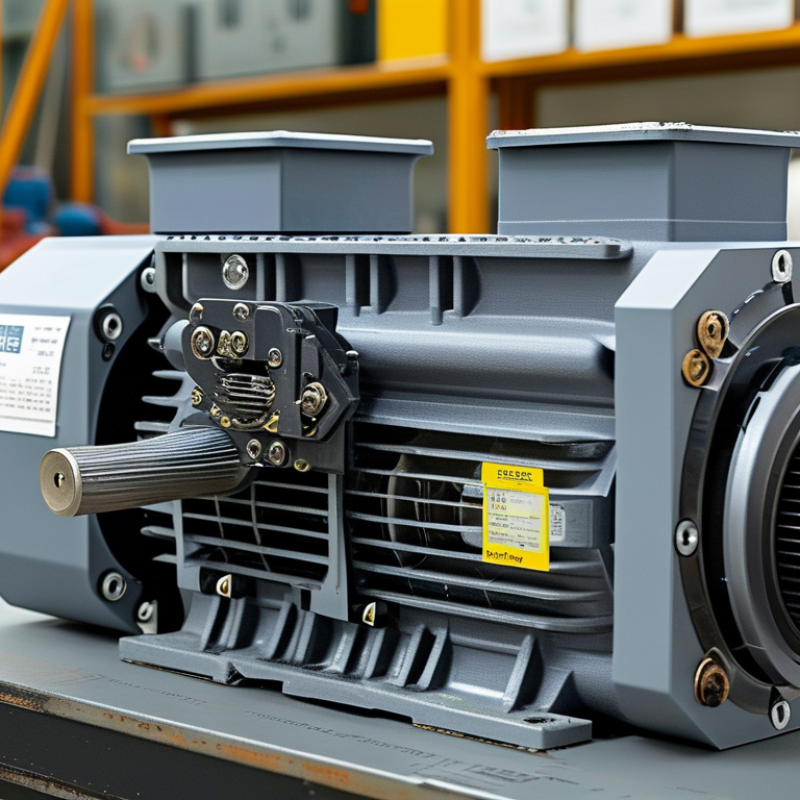
What Are the Best Electric Motor Suppliers in China?

China’s Electric Motor Manufacturing Landscape

China’s electric motor manufacturing landscape is broad, technically capable, and highly competitive. Suppliers produce motors for pumps, fans, compressors, industrial equipment, and electric vehicles. Manufacturing activity is concentrated in coastal industrial areas with strong machining, casting, and electronics supply chains. This proximity can shorten production schedules and simplify component sourcing.

A reliable supplier should provide clear drawings, test records, and traceable production data. Ask about winding processes, rotor balancing, insulation systems, and final-load testing. Factory visits can reveal practical details, such as clean assembly lines, calibrated instruments, and organized spare-part storage. Certifications matter, but they should support real quality controls rather than replace them. Request sample units before signing large orders.

Small differences matter.

Motor efficiency may change with voltage, load, temperature, and duty cycle. Experienced buyers compare performance under the same operating conditions. They also review noise, vibration, bearing quality, and expected service life. Communication deserves attention too. Some suppliers respond quickly before an order, then become less precise during production. That risk is easy to overlook. No factory gets every detail right, including established manufacturers. A careful contract should define tolerances, inspection points, packaging requirements, and remedies for failed tests. China offers many capable electric motor suppliers, but the best choice depends on engineering fit, verified performance, and consistent communication.

Key Types of Electric Motor Suppliers in China

China’s electric motor supply market includes several distinct supplier types. OEM manufacturers produce motors to a buyer’s drawings, specifications, and testing requirements. They often support large equipment makers with stable production and repeat orders. ODM suppliers go further by designing motor structures, housings, and control features for customers who lack an internal engineering team. This option can shorten development time, but the buyer may accept less control over the final design.

Specialized motor factories focus on specific applications, such as industrial pumps, ventilation systems, electric vehicles, or agricultural equipment. Their experience usually appears in details: winding methods, shaft tolerances, insulation grades, and thermal testing. Custom engineering suppliers are useful when a project needs unusual voltage, compact dimensions, low noise, or frequent speed changes. Ask for sample test reports, efficiency data, production photographs, and traceable material records. Real evidence matters more than a polished catalog.

Distributors and trading suppliers serve smaller buyers by combining products from multiple factories. They may offer lower minimum order quantities and easier communication. However, technical responsibility can become unclear when a problem appears. I have found that a factory visit, video inspection, or third-party audit can reveal gaps in quality control. No supplier is perfect. A strong supplier should explain its weaknesses, not only display successful samples. Before ordering, confirm warranty terms, inspection stages, spare-part access, and compliance documents for the destination market. A cheap quotation can become expensive after redesigns, delays, or repeated failures.

Criteria for Evaluating Chinese Electric Motor Manufacturers

Evaluating Chinese electric motor manufacturers requires more than comparing prices. A reliable supplier should show consistent production records, clear technical documents, and verifiable quality procedures. Check factory certifications, inspection standards, and product traceability. Ask how stator winding, rotor balancing, and final assembly are controlled. Small details matter. A clean workshop and labeled testing stations can reveal operational discipline. However, appearance alone proves little.

Request samples that match your intended voltage, torque, speed, insulation class, and duty cycle. Measure noise, vibration, temperature rise, and efficiency under realistic loads. Review test reports instead of accepting general claims. A supplier with engineering staff should explain design limits in practical language. They should also support drawings, prototypes, and controlled modifications. Cheap customization often creates hidden delays.

Assess communication and after-sales support before placing a large order. Can the manufacturer answer technical questions within one working day? Are spare parts, warranty terms, and corrective actions documented? Visit the facility when possible, or use an independent inspection service. I have found that polished presentations can hide weak process control. That is easy to overlook. Delivery history, capacity evidence, and stable component sourcing deserve equal attention. Some buyers focus heavily on unit cost and later pay more for rework, testing, or missed production schedules.

Leading Electric Motor Supplier Categories and Their Strengths

China’s electric motor suppliers are best assessed by category, not catalog size. Standard AC induction motor producers offer durable frames, simple maintenance, and competitive prices. They suit pumps, fans, compressors, and conveyors. The International Energy Agency reports that motor systems consume about half of global electricity. Small efficiency gains can therefore reduce significant operating costs.

High-efficiency motor suppliers focus on IE3, IE4, and emerging IE5 designs. Their strengths include lower losses, cooler operation, and longer service intervals. However, efficiency labels alone are insufficient. Buyers should check test conditions, rated load, insulation class, and certification records. The U.S. Department of Energy notes that motor-driven systems use more than 70% of industrial electricity in the United States. This makes verified performance more valuable than a low purchase price.

Permanent-magnet and servo motor suppliers serve robotics, packaging, machine tools, and precise motion systems. They provide fast response, compact dimensions, and strong energy performance at variable loads. Customized OEM suppliers can adapt shafts, bearings, voltages, and mounting dimensions. That flexibility is useful for replacement projects. It can also create quality risks. A technically strong supplier should provide sample testing, production traceability, load curves, and clear warranty terms. Some published data still look too perfect. Independent testing remains necessary.

What Are the Best Electric Motor Suppliers in China? - Leading Electric Motor Supplier Categories and Their Strengths
Supplier Category Typical Motor Types Common Power Range Primary Applications Key Strengths Customization Capability Common Compliance Requirements Best Fit for Buyers
Standard Industrial Motor Suppliers Three-phase induction motors, single-phase motors, brake motors Approximately 0.12–315 kW for commonly stocked industrial models Pumps, fans, compressors, conveyors, machine tools, and general factory equipment Broad product coverage, established manufacturing processes, easy replacement, and competitive production costs Standard mounting dimensions, voltage, frequency, insulation class, enclosure, shaft, and terminal-box options IEC motor dimensions and performance classifications; local and export-market requirements may also apply Distributors, equipment manufacturers, maintenance departments, and general industrial users
High-Efficiency Motor Suppliers IE3 and IE4 three-phase induction motors, premium-efficiency motors Commonly available from fractional kilowatt ratings to several hundred kilowatts Continuous-duty machinery, HVAC systems, water treatment, process lines, and energy-intensive facilities Lower operating losses, reduced heat generation, and improved lifecycle energy performance Efficiency class, duty cycle, temperature rise, bearing arrangement, enclosure protection, and special environmental protection IEC 60034-30-1 efficiency classes are widely used for international comparison; applicable regulations vary by market Buyers evaluating total cost of ownership rather than purchase price alone
Custom OEM Motor Suppliers Application-specific AC motors, compact motors, geared motors, and special-purpose motors Usually designed around the equipment maker’s required output and installation space Commercial appliances, automated equipment, packaging machinery, material-handling systems, and specialized machinery Engineering support, adaptable mechanical interfaces, private-label production, and integration with customer equipment High: winding design, shaft geometry, mounting, connectors, cable length, sensors, thermal protection, and packaging Customer specifications, applicable electrical safety rules, and target-market certification requirements OEMs requiring repeat production, unique dimensions, or a motor designed around a specific machine
Variable-Frequency Drive Motor Suppliers Inverter-duty induction motors, vector-duty motors, and motors prepared for variable-speed operation Often supplied across low- and medium-power industrial ranges, depending on the cooling and duty requirements Extruders, conveyors, pumps, fans, compressors, hoists, and automated production systems Better suitability for speed control, improved insulation systems, and more reliable operation under drive-generated electrical stress Insulation system, encoder or resolver interface, forced ventilation, brake, shaft grounding, and bearing configuration Motor and drive compatibility, insulation performance, electromagnetic compatibility, and applicable IEC or NEMA requirements Factories using variable-frequency drives or requiring controlled acceleration and speed regulation
Servo and Motion-Control Motor Suppliers AC servo motors, permanent-magnet synchronous motors, and integrated servo motor packages Commonly from a few hundred watts to tens of kilowatts, with larger systems available for specialized equipment Robotics, CNC equipment, semiconductor machinery, printing, packaging, and high-speed automation Fast response, accurate positioning, high dynamic performance, and compatibility with feedback systems Encoder resolution, flange size, brake, connector orientation, shaft design, winding, and control-system compatibility Application-specific motion-control specifications, electrical safety requirements, and machine-level compliance Automation builders that prioritize positioning accuracy, repeatability, and rapid speed changes
Geared Motor Suppliers Helical geared motors, worm geared motors, planetary geared motors, and bevel geared motors Typically selected by output torque and speed rather than motor power alone Conveyors, mixers, lifting equipment, automatic doors, warehouse systems, and low-speed machinery Integrated speed reduction, high output torque, simplified installation, and multiple ratio options Gear ratio, output shaft, mounting position, brake, torque rating, lubrication, and motor voltage Gearbox and motor performance requirements, enclosure protection, safety rules, and application duty classification Equipment manufacturers needing compact drive packages with defined output speed and torque
Small Appliance and Compact Motor Suppliers Shaded-pole motors, capacitor motors, universal motors, BLDC motors, and compact synchronous motors From a few watts to several hundred watts, depending on the design and application Fans, pumps, household appliances, small ventilation units, office equipment, and light-duty mechanisms Compact dimensions, high-volume production capability, flexible electrical options, and cost-effective integration High: dimensions, airflow, noise level, connector, mounting, speed, thermal protection, and control interface Product-specific electrical safety, electromagnetic compatibility, energy, and appliance requirements Appliance brands, small equipment manufacturers, and buyers with strict space or noise constraints
Explosion-Protected Motor Suppliers Flameproof motors, increased-safety motors, and motors for hazardous-area applications Available across selected low- and medium-voltage industrial ratings Petrochemical plants, gas processing, chemical facilities, mines, grain handling, and other hazardous locations Designed for specified hazardous environments, robust construction, and controlled ignition-risk characteristics Hazardous-area classification, temperature class, cable entries, brake, space heater, corrosion protection, and monitoring devices Hazardous-area certification must match the destination market and the specific zone or division classification Industrial buyers whose equipment operates where flammable gas, vapor, dust, or fibers may be present
Waterproof and Corrosion-Resistant Motor Suppliers Totally enclosed fan-cooled motors, stainless-steel motors, washdown motors, and marine-duty motors Commonly offered from small industrial ratings to medium-power process applications Food processing, beverage production, wastewater treatment, marine equipment, outdoor machinery, and coastal facilities Improved resistance to water, cleaning chemicals, humidity, salt exposure, and harsh operating conditions Enclosure protection, stainless-steel components, surface treatment, seals, drain holes, bearings, and cable glands Ingress-protection ratings and hygiene or marine requirements depend on the application and destination market Users needing reliable operation in wet, washdown, outdoor, humid, or corrosive environments
Low-Voltage and Medium-Voltage Motor Suppliers Low-voltage induction motors, medium-voltage induction motors, synchronous motors, and large industrial motors Low voltage commonly covers industrial ratings up to about 1,000 V; medium-voltage designs are used above this range Large pumps, compressors, crushers, mills, conveyors, power facilities, and heavy process industries Support for high-load applications, large-frame construction, specialized cooling, and demanding duty cycles Voltage, starting method, cooling system, bearings, monitoring, vibration limits, base design, and protection systems Voltage-system standards, insulation coordination, site regulations, efficiency requirements, and purchaser specifications Large industrial projects requiring detailed engineering, testing, documentation, and commissioning support

How to Select the Right Electric Motor Supplier in China

Choosing the right electric motor supplier in China requires more than comparing prices. Start by defining the motor’s duty cycle, voltage, frequency, torque, efficiency, and operating environment. A supplier should understand these details without repeated explanations. Ask for production experience with similar applications, not only a general product catalog. A low price can look attractive. It may hide weaker insulation or limited testing.

Check whether the supplier maintains documented quality procedures and traceable production records. Request sample test reports covering efficiency, temperature rise, vibration, noise, and insulation resistance. Reports should align with relevant IEC standards and match the exact motor model. Factory audits can reveal practical details, such as winding equipment, balancing machines, and final inspection stations. Photos are useful, but they are not enough. An independent inspection may be wiser for the first order.

Communication also matters. Confirm drawing approval, packaging requirements, delivery schedules, spare parts, and warranty handling in writing. Reliable suppliers explain technical limits instead of promising everything. Test a sample under realistic load before approving mass production. One common mistake is choosing a supplier after one successful sample. Production consistency still needs monitoring. Another is ignoring after-sales response time until a motor fails. Ask how faults are analyzed and how replacement decisions are documented. Suppliers should provide clear manuals, certificates, and maintenance guidance. The best choice balances engineering support, stable quality, transparent costs, and realistic delivery commitments.

FAQS

: What types of electric motor suppliers operate in China?

: OEM factories build motors from buyer drawings and specifications. ODM suppliers can design housings, structures, and control features. Specialized factories focus on pumps, fans, vehicles, or agricultural equipment.

How can buyers verify a supplier’s production capability?

Request drawings, sample units, test records, and traceable material data. A factory visit may reveal clean assembly lines and calibrated instruments. Appearance proves little.

What technical details should buyers inspect?

Review winding methods, rotor balancing, insulation systems, and final-load testing. Check shaft tolerances, bearing quality, temperature rise, noise, and vibration. Small differences matter.

Should buyers choose the lowest quotation?

Not usually. A low price may lead to redesigns, delays, repeated testing, or failed production runs. Compare total cost, delivery history, warranty support, and spare-part access.

How should motor performance be compared?

Test samples under the same voltage, load, temperature, and duty cycle. Compare efficiency, torque, speed, noise, vibration, and temperature rise. Different conditions can distort the results.

Are certifications enough to confirm motor quality?

No. Certifications should support real inspections and controlled production procedures. Ask for recent test records and confirm that documents match the supplied motor.

What should a purchasing contract define?

Define drawings, tolerances, inspection points, packaging, delivery dates, and failed-test remedies. Include warranty terms, spare parts, corrective actions, and change-control procedures. Vague terms create avoidable arguments.

Is a distributor suitable for a small buyer?

A distributor may offer smaller orders and simpler communication. However, technical responsibility can become unclear when failures appear. Confirm which factory makes the motor and who handles corrective action.

What communication problems should buyers watch for?

Some suppliers respond quickly before ordering, then provide fewer details during production. Set reporting dates, approval stages, and named technical contacts. Good communication still needs written records.

Can inspections guarantee a successful order?

No inspection catches everything. Use samples, factory visits, video checks, or independent audits when practical. Even careful buyers can miss hidden process weaknesses.

Conclusion

China has developed a broad and competitive electric motor manufacturing landscape, serving industries such as automation, renewable energy, transportation, appliances, and industrial equipment. Electric Motor suppliers generally include large-scale manufacturers, specialized producers, custom engineering companies, and trading or sourcing partners. Each category offers different advantages, from high production capacity and cost efficiency to flexible design support and solutions for specific applications.

When evaluating a Chinese supplier, buyers should consider product quality, certifications, manufacturing capabilities, technical expertise, delivery reliability, communication, after-sales service, and customization options. It is also important to review testing procedures, material standards, energy efficiency, production consistency, and the supplier’s ability to meet international requirements. Selecting the right partner requires matching the supplier’s product range, capacity, experience, and service model with the project’s technical and commercial needs. A careful comparison can help buyers achieve dependable performance, stable supply, and long-term cooperation.

Sophia

Sophia

Sophia is a dedicated marketing professional with an exceptional depth of knowledge about her company's products and services. With a keen understanding of market trends and customer needs, she crafts insightful blog posts that not only inform but also engage readers, enriching the company’s online......