Spiro Gear
China has become a major sourcing hub for Speed Control Motor products used in conveyors, fans, pumps, packaging equipment, and automated machinery. Global buyers often compare suppliers by torque range, rated voltage, speed stability, noise level, and delivery capacity. A reliable supplier should explain these specifications clearly, not hide them behind broad catalog descriptions.
Practical evaluation starts with the motor’s working environment. Ask about continuous-duty performance, temperature rise, insulation class, gearbox compatibility, and controller matching. Request test reports, sample units, wiring diagrams, and dimensional drawings before placing a large order. Experienced manufacturers usually discuss these details with confidence. They also understand that a motor running in a dusty workshop needs different protection from one installed in a clean production line.
Certification matters, but it should not replace technical verification. Buyers should review quality systems, production records, inspection procedures, and after-sales support. Factory audits, video inspections, and independent testing can reduce uncertainty. Still, no supplier fits every application. That assumption can fail. A low quotation may exclude controllers, custom shafts, export packaging, or repeated testing. Clear communication remains essential when working across languages, time zones, and engineering standards.
This guide introduces leading China Speed Control Motor suppliers for global buyers. It considers manufacturing experience, product consistency, customization ability, documentation, and international service. The goal is not to promote one company blindly. It is to help purchasing teams compare evidence, identify practical risks, and choose motors that perform reliably in real operating conditions. Small details matter.
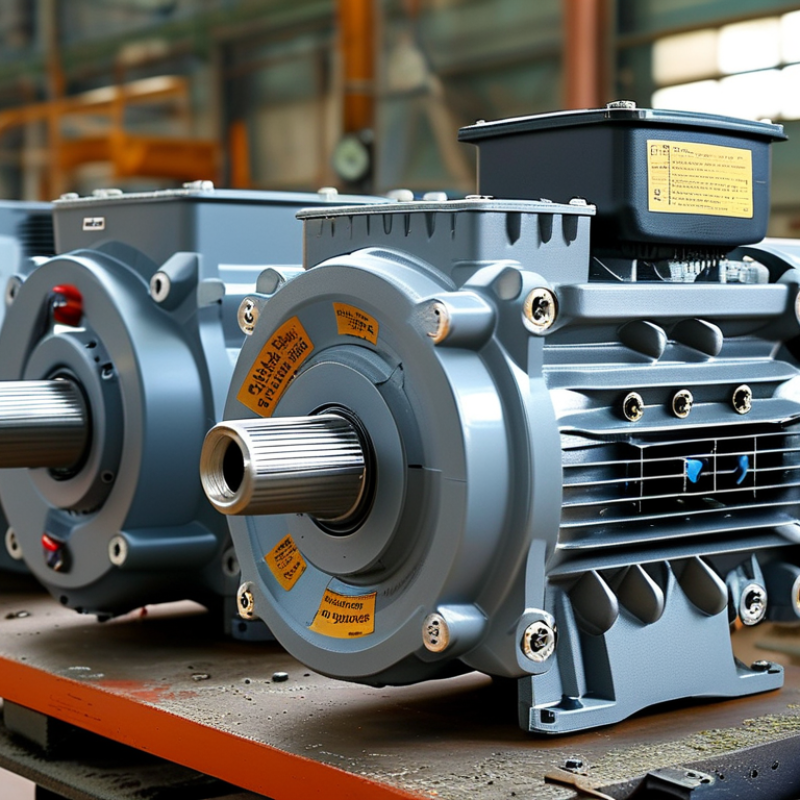
Speed control motors adjust rotational speed to match changing loads. They usually combine an electric motor with a variable-frequency drive or electronic controller. This pairing improves process control in pumps, fans, conveyors, machine tools, and HVAC equipment. Induction motors remain practical for heavy-duty work. Permanent-magnet and servo motors offer faster response and higher precision. The right choice depends on torque, duty cycle, voltage, ambient temperature, and required speed range.
The International Energy Agency estimates that electric motor systems consume about half of global electricity. Even modest efficiency gains can therefore reduce operating costs across factories and commercial buildings. IEC 61800-9-2 provides efficiency guidance for adjustable-speed drive systems. However, catalogue efficiency is not plant performance. Poor sizing, frequent overloads, or incorrect acceleration settings can erase expected savings. Real plants are messier than test curves. Global buyers should request load data, efficiency maps, protection ratings, testing records, and local technical support before selecting suppliers.
Tips: Compare suppliers by verified performance, not price alone. Test the motor under real load conditions. Check compatibility with regional voltage and grid requirements. Ask about spare parts, commissioning, and repair training. A short trial can expose noise, vibration, or unstable low-speed torque. That step may feel slow, but it prevents expensive surprises.
China Top Speed Control Motor Suppliers for Global Buyers
A reliable Chinese motor supplier should be judged by evidence, not catalogue claims. The International Energy Agency estimates that electric motor systems use about 45% of global electricity. Small efficiency losses can therefore become significant operating costs. Ask suppliers for test records under IEC 60034 conditions, not only rated-speed figures. Check efficiency, torque stability, thermal rise, vibration, noise, and braking response across the full speed range.
Speed control performance depends on the complete system. Review the motor, drive, encoder, cooling method, and control software together. A motor rated at 6,000 rpm may overheat during continuous operation. Request duty-cycle data, overload duration, insulation class, IP rating, and bearing-life calculations. Suppliers should explain performance at low speed, where cooling and torque often weaken. This detail matters.
Factory evaluation also needs practical evidence. Verify quality procedures, calibration records, batch traceability, and sample-testing methods. ISO 9001 certification is useful, but it does not replace an independent audit. Request production samples before signing a large order. Compare measured speed deviation with the supplier’s specification. I would not trust a perfect spreadsheet alone. One overlooked connector or encoder fault can stop an entire machine. After-sales response, spare-part availability, and documented warranty limits deserve equal attention. My own weakness would be focusing too heavily on purchase price; lifecycle energy and downtime can cost far more.
| Evaluation Dimension | What to Verify | Practical Buyer Benchmark | Recommended Evidence | Priority |
|---|---|---|---|---|
| Motor Technology | Motor construction and compatibility with the intended speed-control system | Confirm whether the supplier offers induction, permanent-magnet synchronous, brushless DC, or servo motors, together with the matching drive or controller | Technical datasheet, motor-drive compatibility chart, wiring diagram, and application references | High |
| Speed Range | Continuous operating speed, base speed, maximum speed, and low-speed stability | Request a tested operating curve covering the required speed range; verify that maximum speed is permitted for the specific motor configuration | Speed-torque curve, overspeed test record, controller settings, and sample test report | High |
| Torque Performance | Rated torque, peak torque, starting torque, and torque drop at low speed | Check continuous and intermittent torque separately; confirm duty cycle, acceleration time, load inertia, and allowable overload duration | Torque-speed curves, load calculation, thermal test data, and application-specific sizing report | High |
| Power and Voltage | Rated output power, input voltage, frequency, current, and phase configuration | Verify alignment with the buyer’s electrical system, such as single-phase or three-phase supply and the required voltage and frequency | Rated nameplate data, electrical drawings, input-current limits, and conformity documentation | High |
| Efficiency | Motor efficiency at rated load and across the expected operating range | For applicable AC motors, check the declared efficiency class against IEC 60034-30-1; do not evaluate efficiency only at full load | Efficiency map, test method, accredited laboratory report, and motor nameplate information | High |
| Control Accuracy | Speed regulation, feedback method, positioning capability, and response to load changes | Determine whether open-loop control is sufficient or whether encoder, resolver, Hall sensor, or other feedback is required | Speed-regulation data, control algorithm description, encoder specifications, and dynamic-response test results | High |
| Duty Cycle and Thermal Design | Operating duty, insulation system, cooling method, thermal protection, and temperature rise | Match the motor to the required duty classification, such as continuous duty or intermittent duty, and verify protection against overheating | Duty-cycle calculation, thermal test report, insulation class, temperature-rise data, and protection settings | High |
| Ingress Protection | Resistance to dust, water, washdown, humidity, and the installation environment | Specify the required IP rating according to IEC 60529; an IP rating should be selected for the actual enclosure and application conditions | IP test certificate, enclosure drawings, sealing details, and installation instructions | High |
| Mechanical Fit | Frame size, mounting arrangement, shaft dimensions, flange, bearings, and allowable radial or axial loads | Require dimensional drawings and tolerance information before approving a sample or production order | 2D or 3D drawings, shaft-load calculations, bearing specifications, and inspection records | High |
| Noise and Vibration | Acoustic noise, bearing condition, rotor balance, and vibration under variable-speed operation | Define the measurement method, operating speed, load condition, and acceptance limit rather than using an unsupported general claim | Noise and vibration test report, balancing record, bearing specification, and factory inspection checklist | Medium |
| Quality Management | Consistency of incoming inspection, process control, final testing, and traceability | Prefer a documented quality system based on ISO 9001 principles, with serial-number traceability for critical components | Quality certificate, process flow chart, control plan, inspection standard, and corrective-action records | High |
| Compliance Documentation | Applicable electrical safety, electromagnetic compatibility, environmental, and market-entry requirements | Identify the destination-market requirements before production; CE marking, UKCA, UL-related requirements, or other approvals may depend on the complete system | Declaration of conformity, EMC and safety test reports, material declarations, and product labeling samples | High |
| Testing Capability | Availability of dynamometers, load banks, insulation testers, vibration equipment, and calibration control | Verify that the supplier can test the actual motor configuration under representative speed, torque, temperature, and voltage conditions | Equipment list, calibration certificates, test procedures, sample reports, and witnessed test records | High |
| Customization Capability | Winding, shaft, connector, encoder, brake, mounting, firmware, and controller customization | Confirm engineering-change procedures, minimum order quantities, tooling charges, and ownership of customized drawings or software | Customization specification, engineering-change form, prototype plan, and approved drawing package | Medium |
| Sample Validation | Whether samples represent the final production design and materials | Use a written sample approval process covering performance, dimensions, labeling, packaging, and documentation before mass production | Golden sample record, first-article inspection report, sample test results, and signed approval criteria | High |
| Production Capacity | Monthly capacity, lead time, production scheduling, and ability to handle repeat orders | Request capacity figures for the specific motor family and compare standard lead time with peak-season or expedited lead time | Capacity statement, production plan, order history with confidential details removed, and delivery performance data | Medium |
| Supply-Chain Control | Availability and traceability of magnets, copper wire, bearings, laminations, sensors, and electronic components | Assess alternate-source planning for critical parts and clarify how approved substitutions are controlled | Approved vendor list, incoming inspection records, component certificates, and change-notification procedure | Medium |
| Warranty and Service | Warranty period, exclusions, failure analysis, replacement policy, and technical support response time | Require written warranty terms and a defined process for return-material authorization, root-cause analysis, and corrective action | Warranty policy, service-level agreement, failure-analysis template, and spare-parts plan | High |
| Total Landed Cost | Unit price plus tooling, testing, packaging, freight, duties, spare parts, and lifecycle energy cost | Compare suppliers using the same Incoterm, order quantity, payment terms, packaging specification, and delivery destination | Formal quotation, cost breakdown, Incoterm, packaging specification, and five-year operating-cost estimate | High |
| Export Readiness | Export packaging, labeling, documentation, customs data, and experience with the destination market | Confirm correct HS classification, shipping documents, moisture protection, shock protection, and destination-specific labeling | Packing specification, commercial invoice template, packing list, export documentation sample, and shipping checklist | Medium |
| Supplier Risk | Financial stability, dependency on a single factory, ownership of tooling, and business-continuity planning | Use dual sourcing or an approved backup plan for critical applications and clarify access to drawings, tooling, and service parts | Supplier questionnaire, business-continuity plan, tooling agreement, audit report, and risk-mitigation plan | Medium |
China’s speed-control motor market serves automation, ventilation, pumps, conveyors, and compact machinery. Three supplier groups are common. Dedicated motor factories focus on winding, housing, shafts, and rotor balancing. Integrated manufacturers add controllers, gearboxes, sensors, and assembled drive systems. Trading companies can offer broad sourcing, but their technical control may be limited.
Experienced buyers should match the supplier category with the project risk. A motor factory suits repeated orders and custom dimensions. An integrated manufacturer may simplify wiring and system testing. Request drawings, torque curves, speed ranges, insulation classes, and sample test records. Ask how the supplier handles heat, vibration, noise, and overload conditions. Details matter.
Look for automated winding equipment, CNC machining, dynamic balancing, controlled assembly, and end-of-line testing. A capable factory should support prototype changes before mass production. It should also provide traceable inspection data and stable export documentation. Not every supplier measures the same way. Confirm the test method independently. Small inconsistencies can affect field performance.
Conduct a factory audit when order volume justifies it. Review process controls, operator training, incoming material checks, and corrective-action records. Suppliers with engineering teams can improve efficiency through thermal design and controller matching. However, customization may increase lead time and testing costs. Clear specifications prevent expensive revisions later.
China’s top speed control motor suppliers are often assessed through measurable quality standards, not catalog language. Buyers should request torque-speed curves, insulation data, thermal test results, and load-test records. A reliable supplier can provide serial-level traceability for windings, bearings, and controllers. Ask for the applicable ISO 9001 documentation, but verify whether factory procedures match actual production. Paperwork alone is not enough.
Customization may include voltage, shaft dimensions, mounting patterns, braking response, enclosure protection, and communication interfaces. Clear drawings prevent expensive revisions. Suppliers should confirm tolerances, duty cycles, ambient temperatures, and noise limits before production. Small details matter. A motor designed for a clean indoor line may fail in humid processing equipment. Prototype testing under real load is safer than trusting a sample running without resistance.
Export compliance requires more than arranging shipment. Buyers should confirm the correct HS classification, commercial invoice, packing list, country-of-origin details, and destination-market certifications. Markings and technical files may differ by market. Requirements can also change. I have found that some supplier documents are accurate but incomplete, especially around controller specifications and cable materials. An independent inspection can expose these gaps before loading. The process is not flawless, and every approval should be checked against the buyer’s installation site and local regulations.
Global buyers comparing China’s top speed control motor suppliers should begin with application data, not attractive catalog photos. Record voltage, torque range, rated speed, duty cycle, noise limits, mounting space, and operating temperature. A motor tested at 25°C may perform differently inside a sealed machine. Fit matters. Ask suppliers for test reports, load curves, insulation details, and sample units from the actual production line.
Use a comparison table with measurable criteria. Check speed stability under changing loads, controller compatibility, start-up behavior, vibration, packaging, lead times, and spare-part availability. Review quality procedures, traceability records, and relevant product certifications for your destination market. Do not accept vague claims such as “high precision” without tolerances or test conditions. Ask directly. A low unit price can become expensive after redesigns, delays, or rejected batches.
Supplier selection also depends on communication and problem handling. Request a clear quotation, sample schedule, inspection plan, warranty terms, and escalation contact. A capable supplier should explain limitations instead of promising every feature. Video audits and independent pre-shipment inspections can add useful evidence. Still, no evaluation is perfect. I would keep a small pilot order before committing to annual volume. That step may feel slower, but it reveals packaging weaknesses, documentation gaps, and real response times. Reliable partnerships grow through shared specifications, regular feedback, and honest correction when a design assumption proves wrong.
: It adjusts rotational speed as the load changes. It usually combines a motor with an electronic controller. This setup supports pumps, fans, conveyors, and HVAC equipment.
Induction motors often suit demanding, continuous work. Permanent-magnet and servo motors respond faster. They also provide more precise speed control. The best choice depends on torque, duty cycle, and speed range.
Compare motor efficiency under the actual operating load. Check efficiency maps, overload frequency, and acceleration settings. A catalogue figure may not match factory performance. Real plants are messier.
Request torque-speed curves, insulation data, and thermal test results. Load-test records can reveal unstable low-speed torque. Ask for protection ratings and controller specifications. Do not accept vague claims.
Confirm voltage, shaft size, mounting pattern, and braking response. Also check enclosure protection, communication interfaces, and noise limits. Provide clear drawings before production begins. Small details matter.
A motor may perform well without resistance but fail under load. Testing can expose vibration, noise, overheating, or weak starting torque. Use the intended temperature and operating cycle. A short trial can prevent costly redesigns.
Review the commercial invoice, packing list, and origin details. Confirm the correct product classification and destination-market certifications. Technical markings may differ between markets. Documents can be accurate yet incomplete.
Compare measurable results, not catalogue photos or low prices. Review speed stability, lead time, packaging, spare parts, and warranty terms. Request samples from the actual production line. I would keep a small pilot order.
China has become an important sourcing hub for global buyers seeking reliable Speed Control Motor solutions for industrial automation, conveyors, fans, pumps, packaging equipment, and other applications requiring accurate and flexible speed regulation. When evaluating suppliers, buyers should consider motor design, production capacity, engineering expertise, testing procedures, energy efficiency, and after-sales support. Different supplier categories may specialize in standard motors, customized systems, or high-volume manufacturing, so matching capabilities with project requirements is essential.
Quality certification, consistent materials, customization options, and export documentation are also key factors in international cooperation. Buyers should compare suppliers through technical specifications, sample testing, production audits, lead times, pricing transparency, warranty terms, and communication efficiency. A successful partnership depends on clear requirements, reliable quality control, compliance with destination-market standards, and continuous coordination from product development through delivery. With a structured evaluation process, global customers can identify suitable Chinese suppliers and establish stable, long-term cooperation.
